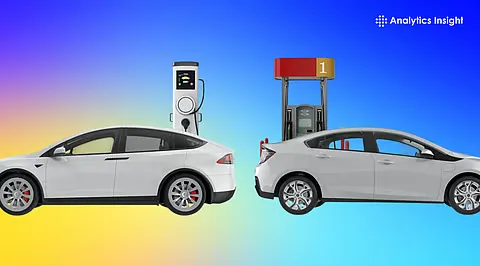
What is the Hybrid vs Electric Debate and Why it Matters
In 2026, the choice between a Hybrid and an Electric Vehicle is essentially a choice between two different financial philosophies. A hybrid uses a traditional internal combustion engine paired with an electric motor to maximize fuel efficiency, while an EV runs entirely on battery power.
This matters now more than ever because the “hidden costs” of car ownership have changed. While EVs generally offer lower running costs per mile, hybrids are currently showing incredible resilience in resale value. Recent data shows that the market share for hybrids grew nearly three times faster than EVs in early 2026. Choosing the wrong one could mean losing thousands in depreciation or overpaying for “public charging” fees that rival the cost of gasoline. Understanding the trade-offs is the difference between a savvy investment and a mounting monthly expense.
Step-by-Step Guide: Choosing the Most Cost-Effective Option
To find your perfect match, follow this checklist to evaluate your real-world costs:
-
Audit Your Daily Mileage: If you drive under 40 miles a day and can charge at home, an EV is almost always cheaper. If you frequently drive 200+ miles for work, a Hybrid saves you from expensive high-speed public chargers.
-
Check Home Charging Access: Can you install a Level 2 charger? If yes, EVs cost about $0.05–$0.09 per mile. If no, you’ll rely on public chargers which can cost $0.15–$0.20 per mile, neutralizing the EV’s savings.
-
Research Local Incentives: In 2026, many regions offer income-based subsidies up to $7,500 for EVs. Check if your specific household income qualifies you for these “Point of Sale” discounts.
-
Analyze Your Climate: EVs lose up to 35-40% of their range in freezing temperatures. If you live in a cold region, you’ll be charging more often, increasing your seasonal operating costs.
-
Compare Insurance Quotes: In 2026, EV insurance premiums have risen by roughly 10%, while hybrids rose only 6%. Get a quote for both models before signing the papers.
The Math Behind the Savings
The primary formula for cost-effectiveness is the Total Cost of Ownership (TCO). To simplify this, we look at the “Energy Cost per Mile.”
For a Hybrid, the formula is:
Example: At $4.00/gallon and 50 MPG, your cost is $0.08 per mile.
For an EV, we use:
Example: At a home rate of $0.15 per kWh and a car efficiency of 3.5 miles/kWh, your cost is $0.04 per mile.
While the EV wins on energy, you must factor in Depreciation. In 2026, non-Tesla EVs are depreciating at a rate of roughly 10% annually, while hybrids are holding steady with only a 1.4% price drop. You essentially “pre-pay” for your EV fuel savings through higher initial costs and faster depreciation.
Real-Life Scenarios: Hybrid vs Electric
Scenario A: The Suburban Commuter
-
The Setup: Sarah drives 12,000 miles a year, mostly to work and back. She has a garage with a charger.
-
The Outcome: Sarah chooses an EV. Her annual “fuel” cost is approximately $480. Compared to a hybrid (costing $960), she saves $480/year. Over five years, including lower maintenance (no oil changes), she saves roughly $3,500, offsetting the EV’s higher purchase price.
Scenario B: The Long-Distance Consultant
-
The Setup: Mike travels between cities, averaging 25,000 miles a year. He relies on public infrastructure.
-
The Outcome: Mike chooses a Hybrid. Because public fast-charging in 2026 costs nearly double home electricity, his EV running costs would be $2,200/year. His hybrid, at 55 MPG, costs him $1,800/year in fuel and offers higher resale value when he trades it in after three years of high-mileage use.
FAQs: Top 3 Questions for 2026
1. Are EV batteries still expensive to replace? Most 2026 models come with 8 to 10-year warranties. While a full replacement out-of-pocket can exceed $10,000, it is rarely necessary within the first 150,000 miles of the car’s life.
2. Does a Hybrid or EV have better resale value? Currently, Hybrids are the winners. Due to high demand and “range anxiety” among used-car buyers, hybrids are retaining their value better than almost any other vehicle class in 2026.
3. Is maintenance actually cheaper for an EV? Yes. EVs have about 20 moving parts in their drivetrain compared to 2,000+ in a hybrid/gas car. You skip oil changes, spark plugs, and transmission flushes, though you will go through tires slightly faster due to the vehicle’s weight.
Conclusion
In 2026, the most cost-effective car depends entirely on your “Charging Profile.” If you can plug in at home and drive moderate distances, the Electric Vehicle is a financial powerhouse that pays for itself over time. However, if you lack a home charger or frequently drive long distances, a Hybrid provides the best balance of fuel economy and resale value